

Orthopedic Cancer Team
At Stony Brook Cancer Center, we know a cancer diagnosis is life‑changing and requires personalized care. Our orthopedic cancer program is led by Fazel Khan, MD, and treats primary and metastatic tumors of the bone and soft tissues. Our multidisciplinary team includes orthopedic surgeons, radiologists and interventional radiologists, pathologists, medical oncologists, radiation oncologists and plastic surgeons.
After diagnosis, we meet as a team to create a care plan tailored to your tumor type, stage, personal needs and quality‑of‑life goals. We treat both adults and children. Treatment may include surgery, radiation therapy or chemotherapy, used alone or in combination. When appropriate, we also offer immunotherapy.
Types of Orthopedic Cancer and Benign Tumors
Benign Bone Tumors
- Aneurysmal Bone Cyst
- Chondroblastoma
- Fibrous Dysplasia
- Osteoblastoma
- Osteochondroma
- Giant Cell Tumor of the Bone
Malignant Bone Tumors
- Metastatic Bone Disease and Pathological Fractures
- Multiple Myeloma
- Lymphoma of the Bone
- Chordoma
- Chondrosarcoma
- Ewing Sarcoma
- Osteosarcoma
Benign Soft Tissue Tumors
Malignant Soft Tissue Tumors
Is there a clinical trial right for you?
(631) 728-7425
Our Orthopedic Oncology Team
Orthopedic Oncology
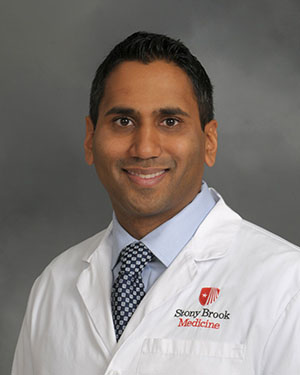
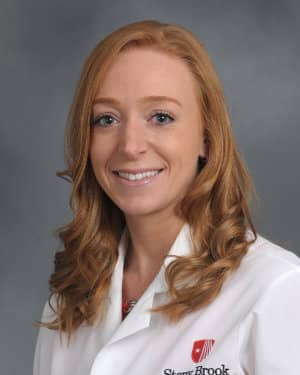
- Haley A. Riordan, PA
Orthopedic Oncologist
Plastic and Reconstructive Surgery
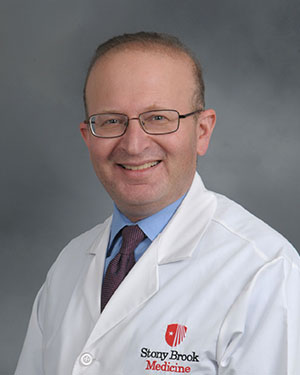
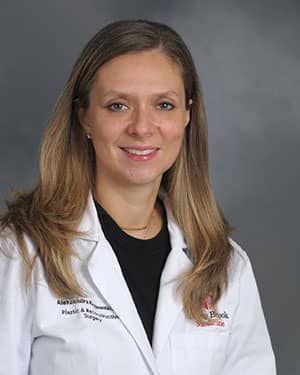
Hematology/Oncology

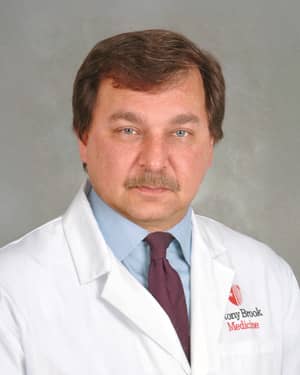

Pediatric Hematology/Oncology
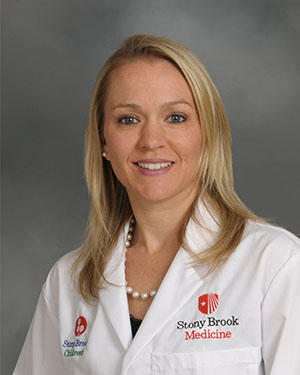



Interventional Radiology

Radiation Oncology
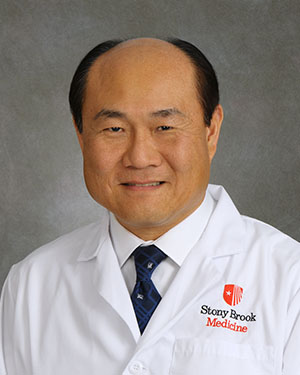
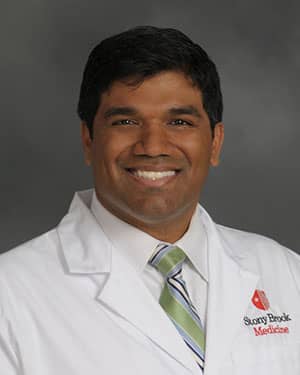
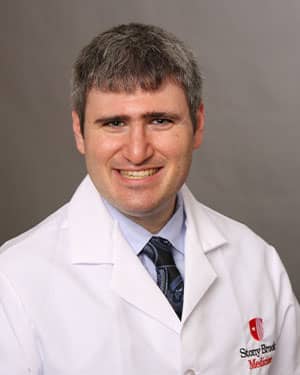
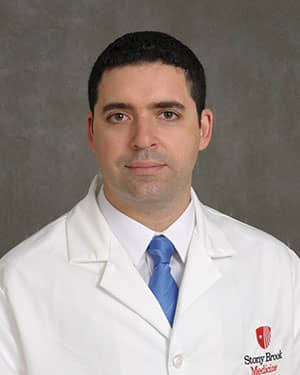

Meet Our Doctors
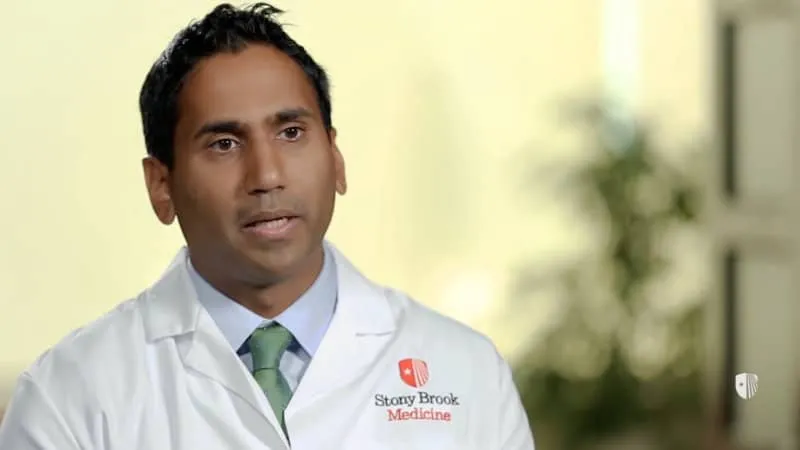
Fazel Khan, MD

Laura Hogan, MD
Treatment and Care
Stony Brook offers comprehensive surgical care for primary and metastatic bone and soft‑tissue tumors, from diagnosis through recovery. Our orthopedic oncology surgeons work closely with medical and radiation oncologists, plastic and reconstructive surgeons, and pediatric specialists to create a personalized plan based on your cancer type and stage.
Whenever possible, we use limb‑sparing techniques and the least invasive approach, including traditional open, minimally invasive or robotic‑assisted surgeries, to remove the tumor and protect function. When needed, we perform complex reconstructions of joints (elbow, shoulder, hip, knee) and can replace bone with implants or grafts. We also offer advanced options such as tantalum‑based joint reconstruction for challenging metastatic disease.
Learn more about our surgical options and limb‑sparing procedures.
Medical oncology is part of the treatment plan for most cancer patients. Medical oncologists are the doctors who manage cancer medicines. At Stony Brook Cancer Center, our medical oncologists who specialize in orthopedic cancers work on a multidisciplinary team with your orthopedic cancer doctor and other specialists. They review your history and diagnosis and recommend the best treatment, which may include chemotherapy, oral medications, or immunotherapy.
Chemotherapy
Chemotherapy uses medicines to destroy cancer cells. It can be given by mouth, by injection or through an intravenous (IV) line. When IV chemotherapy is scheduled, patients receive treatment on Level 6 of the Outpatient Cancer Center in semi-private or private treatment bays.
Immunotherapy
Immunotherapy helps your own immune system recognize and attack cancer. These treatments are often made from biologic sources and are given by injection or IV. Your oncologist will recommend options based on your specific cancer and overall health.
Radiation oncology uses targeted high‑energy X‑rays to kill or shrink cancer cells while protecting nearby healthy tissue. It can be the main treatment for some orthopedic cancers or used with surgery and/or chemotherapy to improve outcomes. Radiation can also relieve symptoms when cancer has spread.
A radiation oncologist who specializes in orthopedic cancer reviews your diagnosis and recommends the best approach. Options include:
Stereotactic Body Radiation Therapy (SBRT) / SRS
SBRT/SRS delivers highly focused radiation with sub‑millimeter precision in one to five sessions, targeting the tumor while sparing nearby tissue. It’s often used for early‑stage tumors or isolated metastases and is completely noninvasive. Learn more about Stereotactic Body Radiation Therapy (SBRT) / SRS
IMRT / 3DCRT
IMRT and 3DCRT shape radiation to the tumor’s 3‑D contours and are typically given in small daily doses before or after surgery. These techniques treat the tumor and nearby at‑risk areas to reduce recurrence while limiting side effects. Learn more about IMRT / 3DCRT
Interstitial Brachytherapy
Brachytherapy places a temporary radioactive source directly in the tumor area using image‑guided needles under anesthesia. This approach delivers a very high dose to the cancer with minimal exposure to surrounding healthy tissue. Learn more about Interstitial Brachytherapy
