
Cungui Mao Research Lab
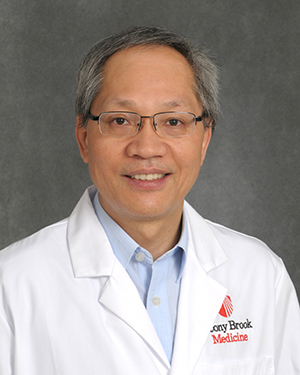
Cungui Mao, PhD
- Professor, Department of Medicine, Renaissance School of Medicine
Office: (631) 216-2904
Email: Cungui.Mao@stonybrookmedicine.edu
Stony Brook Cancer CenterMART Building, Room 9M-0834
Lauterbur Drive
Stony Brook, NY 11794-7294
Research Program
Department
Research Interest
Dr. Mao has been working on the metabolism and signaling functions of bioactive lipids, sphingolipids in particular, in different species such as yeast, insects, and mammals for two decades. His lab has identified and cloned numerous genes encoding enzymes responsible for sphingolipid metabolism, including two yeast sphingosine-1-phosphate phosphatases (YSR2 and YSR3), two yeast alkaline ceramidases (YPC1 and YDC1), one Drosophila alkaline ceramidase (DaCER1), three mouse alkaline ceramidases (Acer1, Acer2, and Acer3), and three human alkaline ceramidases (ACER1, ACER2, and ACER3). His group has demonstrated that these enzymes play crucial roles in regulating bioactive sphingolipids implicated in diverse biological processes.
Research achievements include:
- Yeast YSR2 and YSR3 regulate heat stress response and cell cycle progression in yeast cells.
- Yeast YPC1 and YDC1 regulate heat stress response, cell cycle progression, and chronological life span.
- Drosophila melanogaster DaCER1 regulates oxidative stress response and longevity.
- Acer1/ACER1 regulates epidermal keratinocyte differentiation and proliferation, epidermal barrier function, and hair follicle stem cell homeostasis.
- Acer2/ACER2 regulates placental vasculature integrity, sphingoid base homeostasis in circulation and tissues, and cellular stress responses, including nutrient deprivation and DNA damage.
- Acer3/ACER3 regulates sphingolipid homeostasis in the central nervous system, neuronal aging, inflammation, tumorigenesis, and non-alcoholic steatohepatitis.
Education
- PhD, East China Normal University (ECNU) and Shanghai Institute of Biochemistry, Chinese Academy of Sciences, Shanghai, China
- Postdoctoral training, Duke University, Durham, North Carolina — Dr. Lina Obeid’s laboratory
